
Japanese Import
Car Keys
Specialist Key Replacement in South East England
Kent | East Sussex | West Sussex | Surrey
If you own a Japanese import car in the UK, getting a replacement key is not always as straightforward as it is for a standard UK-market vehicle.
Your car may look almost identical to a model sold here, yet the electronics inside the key, the remote-control frequency, the transponder system and even the programming procedure can be different.
Remote keyless-entry systems commonly use different regional frequencies, with 315 MHz commonly associated with Japanese and North American applications and around 433.92 MHz widely used for European applications.
At SE Car Keys, we understand that Japanese import car keys require a more careful approach, and specialist equipment may be needed to identify, generate and programme the correct key.
Fully Equipped for Japanese Import Vehicle Keys
315 MHz Equipment
Software For Imports
All Japanese Car Brands
No Existing Key Needed
Frequency-Specific
Why Japanese Import Keys Are Different:
The main issue isn’t the shape of the key or the way it looks; it’s what’s happening inside it.
Radio frequency mismatches.
UK and European vehicles almost universally use a 433/434 MHz frequency for their remote locking and keyless entry signals. Many Japanese-spec vehicles, however, transmit on a completely different frequency; commonly 312 MHz or 313.35 MHz, sometimes 315 MHz.
A fob built for the Japanese market simply cannot “talk” to a UK-spec receiver, and vice versa.
Fit the wrong frequency fob and the remote buttons, keyless entry and sometimes even the immobiliser handshake will fail outright, no matter how well the key is cut or how many times it’s reprogrammed.
Different transponder chips.
Even within the same manufacturer, a Japanese-spec model can use a different transponder ID than its UK-spec counterpart.
A Japanese Toyota, for example, may use a different chip ID to a UK-market Toyota of the same generation, genuine parts from the same brand, but not interchangeable.
Import-specific immobiliser and ECU coding.
‘Grey imports’ often retain their original Japanese immobiliser system rather than a UK-fitted one, meaning the security handshake between key and car follows Japanese OEM protocols, not UK ones.
Sourcing the right blank or fob body.
Many JDM remote and smart key housings simply aren’t stocked by generic UK key suppliers, so replacements have to be sourced specifically for import-spec vehicles.


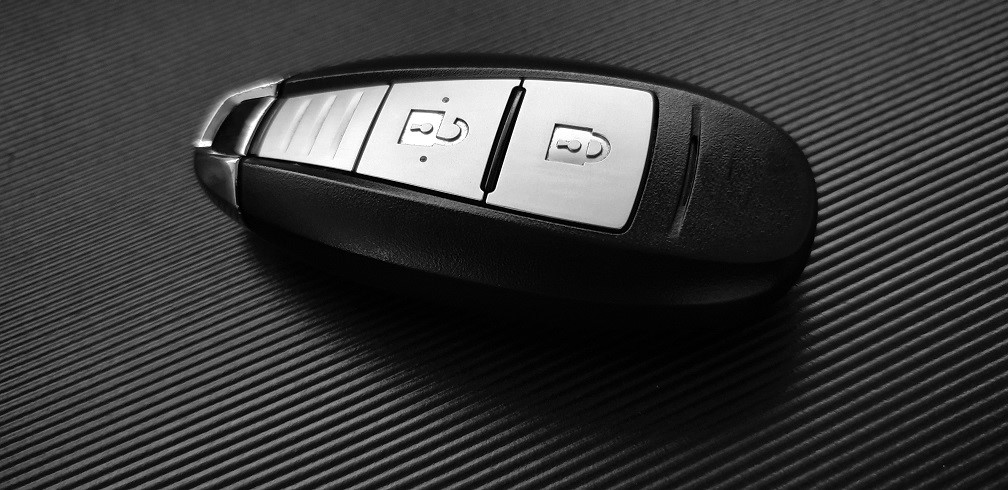
Mobile Locksmith Japanese Import Vehicles:
Lock Out Car Entry
New Keys & Duplicates
ECU & Key Programming
Ignition & Door Lock Repairs
Spare Key Cutting & Programming
Key Programming for New ECUs
If you’re based in Kent, Sussex or Surrey, own a Japanese import vehicle, and have key or locking issues, we can help.
We offer a wide range of auto locksmith services.
Including:
✓ Replacement remote key fobs; matched to your vehicle’s exact frequency (312/313/315 MHz and others)
✓ Spare key cutting and duplication; for import-spec blades and profiles
✓ Lost key replacement; including full lockout and no-working-key situations
✓ Immobiliser and transponder programming; for JDM-spec ECUs
✓ Mobile call-outs; across Kent, Sussex and Surrey, so you’re not stuck without a car
✓ Work carried out at your location; we bring all we need to assist with our fully stocked mobile workshop.
Covering Kent, East & West Sussex & Surrey
SE Car Keys operates a fully mobile service across the South East.
We are a fully mobile auto locksmith service that aims to be with you quickly.
Covering the South East:
- Kent: Including: Maidstone, Ashford, Canterbury, Dartford, Tunbridge Wells
- Surrey: Including: Guildford, Woking, Reigate, Epsom, Farnham
- Sussex: Including: Crawley, Brighton, Worthing, Eastbourne, Hastings.
We aim to answer all calls, provide a free quote and be with you as soon as possible.

Our Most Popular Services For Japanese Vehicles:
Japanese Import Spare Keys
Need a spare key for your import?
We offer cheaper-than-dealership prices. Many dealers come to us for our mobile service and our quality parts & equipment.
Japanese Import Lock Outs
Locked out of your Japanese Import?
Our non-destructive entry will get you in without causing damage. We can also replace or programme new keys.
Classic Japanese Vehicles To Modern
Not sure if we can help you?
We’re fully equipped with spare keys and programming software to deal with vintage cars to modern wireless entry.
Lost Keys Replaced & Programmed
Lost your only key?
We can come and create new keys and program them to enter and start your vehicle, right at your location.
Classic Japanese Import Vehicles To Modern Wireless Entry and EVs
We can work on any Ford model, from classic to brand-new vehicles.
We stock classic Ford car keys, programmable fobs, keyless entry fobs and keyless entry cards in our mobile workshop.
Our services are fast response and fast turnaround times, to cut and program new keys that will be compatible with your Ford vehicle, whether it is brand new or even vintage.



We Come To You & Work On All Ford Models:
Here are some Japanese car brands that SE Car Keys commonly works on in the UK:
Toyota: Alphard, Vellfire, Estima, HiAce, Land Cruiser, Prius
Nissan: Elgrand, Serena, Cube, Skyline, Stagea, Note
Honda: Stepwgn, Odyssey, Freed, Stream, Integra
Mazda: RX-7, RX-8, Bongo, Demio, Roadster
Mitsubishi: Delica, Pajero, Lancer Evolution, GTO
Subaru: Impreza, Forester, Legacy, Outback
Suzuki: Jimny, Swift Sport, Cappuccino, Wagon R
Lexus: LS, GS, IS, RX and other Japanese-market models
Daihatsu: Terios, Copen, Mira, Hijet
Mitsubishi: Canter and other Japanese-market commercial vehicles
Isuzu: D-Max, Trooper and other commercial/off-road models
Infiniti: Japanese-market luxury models, including the Skyline-based range
Typically, we see Toyota, Nissan, Honda, Mazda, Mitsubishi, Subaru and Suzuki, but we’re geared up for a wide range of vehicles.
If your make and model isn’t listed, don’t worry; simply get in touch, and we’ll advise if we can assist you!
Japanese Import Auto Locksmith FAQ:
How quickly can you get to me?
As a mobile locksmith, we aim to reach most locations across our Kent, Sussex, and Surrey coverage area promptly, including emergency lockouts.
Why do some auto locksmiths say they cannot programme my Japanese import?
There are thousands of different vehicle key systems, and no single piece of equipment covers every make, model and regional specification.
A locksmith may have extensive experience with common UK-market vehicles but not have the equipment required for a particular Japanese domestic-market vehicle.
This can be especially relevant when the vehicle uses an unusual frequency or a key system that was never widely used in Britain.
Being told that specialist equipment is required does not necessarily mean that the vehicle cannot be programmed.
It may simply mean that the particular locksmith does not have the required equipment or software for that vehicle.
If another locksmith has already been unable to help, provide SE Car Keys with the vehicle details and explain what equipment or programming attempts have already been carried out.
What is the most important thing to know about Japanese import car keys?
The most important thing is simple: do not assume that a Japanese import uses the same key as the equivalent UK-market vehicle.
The remote frequency can be different, the transponder can be different, the programming procedure can be different and the vehicle may use a completely different smart-key or proximity system.
A replacement key therefore needs to be matched to the actual vehicle specification.
Specialist equipment may be needed to identify the frequency and programme the correct key, and not every auto locksmith will have the necessary equipment.
If you own a Japanese import in South East England and need a replacement or spare key, SE Car Keys can assess the vehicle and determine what is required before proceeding.
What frequency do Japanese import car keys use?
Japanese imported car keys do not all use the same frequency, which is one of the main reasons replacement keys can be more complicated than expected.
315 MHz is commonly found on Japanese-market vehicles, while some Japanese vehicles use frequencies around 312 MHz or other configurations depending on the manufacturer, model, year and market specification.
European-market vehicles commonly use the 433 MHz region, including 433.92 MHz applications.
The important thing is not to assume that every Japanese import uses 315 MHz. A vehicle imported from Japan could have a completely different specification from a visually similar UK-market model.
The correct frequency needs to be established from the vehicle and its existing key where possible. Specialist equipment can be used to identify the signal and help determine which replacement key is appropriate.
If you are unsure about the frequency of your Japanese import key, SE Car Keys can assess the vehicle and key requirements before a replacement is supplied or programmed.
Will a 433 MHz key work on a Japanese import?
Not necessarily. A 433 MHz or 433.92 MHz remote may be suitable for many European-market vehicles, but that does not mean it will communicate correctly with a Japanese-market vehicle designed to use another frequency.
The remote and the vehicle’s receiver need to be compatible. If the vehicle is expecting a signal in one frequency range and the replacement key is transmitting elsewhere, pressing the buttons may produce no response.
The key can look completely correct while remaining electronically incompatible.
There are also other factors beyond frequency, including the remote’s electronic configuration, transponder technology, coding and programming procedure.
Consequently, frequency is an important part of key identification, but it is not the only consideration.
Where does SE Car Keys provide Japanese import key services?
SE Car Keys is based in South East England and provides automotive key services for customers in the surrounding area.
If you have a Japanese import and are unsure whether your vehicle can be supported, contact SE Car Keys with the registration, make, model, year and details of the key you currently have, if any.
Because Japanese imports can use different frequencies and electronic systems from UK-market vehicles, enquiries are assessed around the specific vehicle rather than treated as a generic key replacement.
Whether you need a spare, replacement, damaged key solution or assistance after losing all your keys, getting the vehicle specification right from the beginning can make the entire process much easier.
Why do Japanese import cars use different key frequencies?
Car manufacturers configure vehicles for different markets, and radio-frequency regulations and vehicle specifications can vary between countries.
Japan has historically used different frequency allocations for remote keyless-entry systems from those commonly encountered on European vehicles.
As a result, a vehicle manufactured specifically for the Japanese domestic market can have a remote system that differs from a UK-market version of the same model.
This can create problems when a Japanese import arrives in Britain and eventually needs a replacement key.
The vehicle itself does not automatically change its electronic specification simply because it has been imported. It continues to use the radio system it was manufactured with.
That means fitting a standard UK-market remote to the car may not work if the key is transmitting on an incompatible frequency.
This is why Japanese import car key replacement requires vehicle-specific identification rather than simply matching a key by appearance.
Why won't my Japanese import key work even though it looks identical?
A matching appearance does not guarantee electronic compatibility.
Replacement keys are often advertised by vehicle make and model, but a single model can have several key variations depending on production year, market, security system and vehicle specification.
The replacement may have the wrong frequency, incorrect transponder, incompatible remote electronics or simply require a different programming procedure.
In some cases, the key may be partially compatible: for example, the immobiliser may recognise the transponder while the remote locking buttons do not work.
This is why repeatedly buying keys that “look the same” can become expensive. The correct key needs to match the vehicle electronically as well as physically.
Can you tell the key frequency from the appearance of the key?
Not reliably.
The shape of a key or remote can provide useful clues, but it does not necessarily tell you what frequency the internal electronics use.
This becomes even more complicated when a previous owner has replaced the plastic casing.
The buttons and shell may look identical to an original key while the electronic circuit board inside is different.
Conversely, an aftermarket replacement may have a different appearance while containing compatible electronics.
Specialist equipment can provide a much more reliable way of identifying the signal being transmitted.
This is particularly useful when dealing with an unusual Japanese-market vehicle or a key that has already been modified.
If you are unsure what key you have, don’t rely solely on photographs or the casing markings.
Professional identification can help establish what the vehicle actually requires.
Does every Japanese import use 315 MHz?
No.
This is an important misconception.
While 315 MHz is commonly encountered on Japanese-market vehicles, Japanese imports can use different frequencies depending on the manufacturer, vehicle generation and market specification.
Some Toyota applications, for example, have been associated with frequencies around 312 MHz, while other Japanese-market vehicles can use 315 MHz or alternative configurations.
This is why ordering a replacement key based solely on the statement “Japanese cars use 315 MHz” can result in the wrong key being supplied. The safest approach is to identify the exact vehicle and key system first.
At SE Car Keys, the vehicle’s make, model, year, key type, and available key information can all help determine the appropriate replacement.
Is the remote frequency the same as the immobiliser frequency?
No.
These are separate parts of the vehicle’s key system.
The remote section communicates wirelessly with the vehicle to perform functions such as locking and unlocking the doors.
The immobiliser system is concerned with authorising the vehicle to start.
Depending on the vehicle, the immobiliser can use a transponder system that operates differently from the remote-control system.
This explains why you can sometimes encounter a situation where a key starts the car, but the buttons do not operate the central locking.
The immobiliser and remote functions are not necessarily using the same technology.
A professional diagnosis should therefore consider both the remote and immobiliser systems, rather than assuming that programming one automatically solves the other.
Can you make a spare key for a Japanese import?
In many cases, yes.
The exact solution depends on the vehicle and key system.
Having one working key available is generally preferable because it gives the locksmith an existing key to identify and work from.
A replacement spare can then be prepared and programmed according to the vehicle’s requirements.
If you currently have only one key for your Japanese import, it is worth considering a spare before the original is lost or damaged.
Losing the final working key can turn a relatively straightforward spare-key job into a more involved all-keys-lost situation.
A spare key is therefore not just a convenience; it can be valuable insurance against a much more stressful situation later.
Can a Japanese import use a smart key or proximity key?
Yes.
Many Japanese-market vehicles use smart keys, proximity keys and keyless-entry systems rather than traditional mechanical keys.
With these systems, the vehicle can detect an authorised key when it is nearby, allowing the owner to unlock the doors or start the vehicle without necessarily inserting a conventional key.
Nissan’s Intelligent Key technology is one example of this type of system.
Smart keys can be more complicated to replace because there can be several electronic functions incorporated into one unit.
The replacement may need to be compatible with the vehicle’s proximity system, remote frequency, immobiliser and programming procedure.
If your Japanese import has push-button start, tell the locksmith when requesting a replacement because this can indicate a more advanced key system.
Can a Japanese import key start the car but not lock or unlock it?
Yes.
This is possible because the remote and immobiliser functions perform different jobs.
For example, the transponder inside a key could be correctly programmed so that the vehicle allows the engine to start, while the remote circuit is operating at the wrong frequency or has not been synchronised correctly.
The result is a key that starts the vehicle but does not operate the buttons.
The opposite situation can also occur, where the remote appears to lock and unlock the car but the immobiliser has not been correctly programmed.
If you experience this problem, don’t automatically replace the entire vehicle key system.
Our specialists can determine which part of the key is working and which part needs attention.
Can you replace a lost Japanese import car key?
Depending on the vehicle, a replacement can often be produced even when the original key has been lost.
The process may be more involved than making a spare because there is no working key available to identify, copy or use as a programming reference.
Specialist diagnostic and key-programming equipment may be required to establish the vehicle’s security system and programme a compatible replacement.
The exact procedure varies between manufacturers and vehicle generations.
Factors such as the vehicle’s immobiliser system, remote frequency, smart-key technology and whether the vehicle is fitted with keyless entry can all affect the job.
If you have lost all your keys, provide as much information as possible, including the registration, make, model, year, and whether the car uses a conventional key or push-button start.
Can a main dealer make a key for my Japanese import?
Main dealers use SE Car Keys when they can’t do the job themselves!
A main dealer may be able to assist, but imported vehicles can sometimes present additional challenges because the vehicle was originally manufactured for another market.
The dealer route can also involve different processes, parts availability and costs compared with using an independent automotive locksmith.
For certain Japanese-market vehicles, a specialist locksmith with the appropriate aftermarket equipment may have more practical experience with imported specifications.
The best option depends on the vehicle and the exact key problem. If you are considering a dealer, it can still be worthwhile asking a specialist locksmith whether the vehicle can be supported before committing to recovery or dealership work.
Can I buy a Japanese import key online and have you programme it?
This depends on the key you purchase. Some online replacement keys can be compatible, but there is a significant risk of ordering the wrong frequency, transponder, circuit board or key configuration.
A key advertised for the correct vehicle model may still be intended for a different regional market.
It may also be supplied without the correct electronics or contain an incompatible aftermarket circuit board.
If you already have a replacement key, provide details or photographs before arranging programming. Programming cannot make every incompatible key work with every vehicle.
The underlying electronics must be suitable in the first place.
Where possible, identifying and supplying the correct key as part of the locksmith service can reduce the risk of purchasing the wrong component.
Can you help if I have lost all my Japanese import keys?
An all-keys-lost Japanese import can often be assessed by a specialist auto locksmith, although the equipment and procedure required will depend on the exact vehicle.
Without an existing key, the locksmith may need to establish the vehicle’s immobiliser and key system before a replacement can be produced.
This can require specialist diagnostic equipment and, in some cases, additional key-generation equipment.
This is one of the situations where using a locksmith experienced with Japanese imports can be particularly important.
A standard key-cutting service may not have the equipment required to complete the electronic side of the job.
When contacting SE Car Keys, explain that all keys have been lost and provide the vehicle details.
This allows the job to be assessed correctly before equipment and replacement parts are arranged.
My Japanese import key has stopped working. Is it definitely the key?
Not necessarily.
A non-working remote can have several possible causes.
The key battery could be flat, the remote circuit could be damaged, the vehicle battery could be low, the key could have lost synchronisation, or the key could be electronically incompatible.
There may also be an issue with the vehicle’s receiver or central locking system.
This is why replacing the key immediately is not always the best first step.
A professional can test the key and consider the vehicle at the same time.
If the key has recently been dropped, exposed to water or physically damaged, tell the locksmith.
Those details can provide important clues during diagnosis.
Can you repair a Japanese import car key instead of replacing it?
Sometimes a repair may be possible, depending on what has failed.
For example, a damaged casing, worn buttons or certain physical problems may not require the entire electronic key to be replaced.
However, if the internal circuit board or transponder is damaged, replacement may be the more practical option.
The key’s condition should therefore be assessed before deciding what to do.
If the vehicle still starts with the key but the buttons have stopped working, there may be a different solution from a situation where the vehicle no longer recognises the key at all.
Bring or show the existing key whenever possible, as its condition can help determine whether repair, replacement or programming is the most appropriate route.
What information do you need to identify my Japanese import key?
The more information you can provide, the easier it is to establish the correct key system.
Useful information includes:
- Vehicle registration number
- Make and model
- Year of manufacture
- VIN or chassis number, if available
- Whether the vehicle is a Japanese import
- Whether it has push-button start
- Whether it uses a smart/proximity key
- Whether you have a working key
- Photographs of the existing key
- Any numbers or markings printed on the key
- Whether the remote buttons currently work
- Whether the vehicle currently starts
The registration number is often a useful starting point, but Japanese imports can have unusual model and specification information.
The more information available, the less guesswork is involved.
Are Japanese import car keys more expensive than UK car keys?
They can be, although the cost depends heavily on the vehicle and key system.
A straightforward conventional key can be relatively simple, while a Japanese import with an unusual frequency, smart key, proximity system or specialist immobiliser can require more expensive equipment and replacement components.
The cost can also increase when all keys have been lost because the locksmith may need to perform additional diagnostic and programming work.
This is another reason that having a spare key made while you still have a working original can be worthwhile.
The best way to establish the cost is to provide the exact vehicle details and key situation rather than relying on a generic price for the same model sold in the UK.
Do Japanese import keys need specialist equipment?
In some cases, yes.
This is one of the most important things for owners of Japanese imports to understand.
A standard key-cutting machine can cut the mechanical portion of a key, but that does not necessarily address the electronic side.
Specialist equipment may be required to identify the remote frequency, generate or programme the correct key, communicate with the vehicle and deal with its immobiliser or smart-key system.
Not every auto locksmith has every type of automotive key equipment. Japanese-market vehicles can therefore require a locksmith with specialist knowledge and equipment for imported vehicles.
At SE Car Keys, Japanese import enquiries are assessed according to the actual vehicle and key system rather than assuming that a UK-market replacement will be suitable.
Can you programme a Japanese import key without the original?
Sometimes.
The answer depends on the vehicle.
If all keys have been lost, the locksmith may be able to use specialist diagnostic and key-programming equipment to establish the vehicle’s security system and add a new key.
However, some vehicles have more complex security procedures than others.
This is why an all-keys-lost enquiry should always include the exact vehicle details.
The make and model alone may not provide enough information because different years and regional specifications can use different systems.
If you have no original key, tell the locksmith before booking the job so the correct procedure and equipment can be considered.
Does a Japanese import have to go to a dealership for a replacement key?
Not necessarily.
A specialist automotive locksmith may be able to provide a replacement or spare key for many Japanese imports without the vehicle going to a dealership.
The important factor is whether the locksmith has the appropriate equipment and knowledge for the specific vehicle.
This can be particularly useful when the vehicle is immobilised because all keys have been lost.
A mobile locksmith service can also be convenient because the technician can potentially work at the vehicle rather than requiring the customer to arrange recovery.
Whether a mobile replacement is possible depends on the individual vehicle and the work required, so it is best to provide the vehicle details before arranging the job.
Do Japanese import car keys use different programming procedures?
Yes, programming procedures can vary significantly between manufacturers, models, years and regional specifications.
Some vehicles may have a relatively straightforward programming procedure, while others require diagnostic equipment to communicate with the vehicle’s immobiliser or body-control system.
Smart-key and proximity systems can introduce additional stages.
This is another reason why online “press these buttons in this order” programming instructions do not work for every vehicle.
A procedure designed for a UK-market version of a vehicle may not apply to the Japanese-market version.
Correct vehicle identification is the starting point for correct programming.
Get In Touch
Need a SERMI approved locksmith in the South East?
Call SE Car Keys for a free quote.
We cover Kent, Sussex and Surrey with fast response times and full SERMI certification.
All makes. All models. All mobile.